The notorious Big Brother Award
The Big Brother Awards serve as a public “shame prize” for those who have significantly violated privacy rights over the past year. Organised by digital rights groups such as Bits of Freedom, the ceremony uses satire to highlight serious concerns about government surveillance and corporate data misuse. While the main awards are unwanted, the event also recognises one privacy heroes who fight for digital freedom through the Felipe Rodriguez Award. This is the only positive prize of the night, named after a pioneer of the Dutch digital rights movement. It is awarded to activists, whistleblowers, or organisations that have made extraordinary efforts to protect online freedom and privacy.
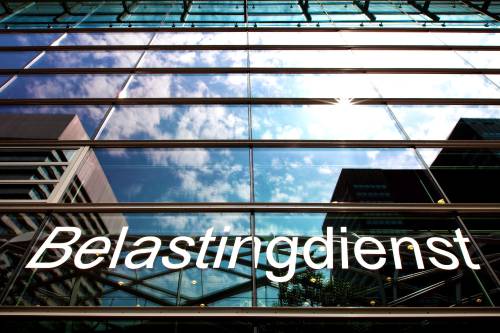
The Dutch tax authority (Belastingdienst) has pledged to use algorithms more responsibly following a formal reprimand. The organisation recently received a Big Brother Award, an annual prize given by the advocacy group Bits of Freedom to those who violate digital rights and privacy. Despite the criticism, a spokesperson stated that the authority cannot manage billions of euros in tax revenue without these automated systems.
An algorithm is a step-by-step process that a computer follows to complete a task. According to the spokesperson, the organisation was already reviewing its practices following a critical investigation by the Dutch Data Protection Authority (Autoriteit Persoonsgegevens). This year, the police also received an award for monitoring activists online and visiting them at their homes.
Strict legal and ethical requirements
Benjamin Jansen, the director responsible for the use of algorithms at the tax authority, spoke at the award ceremony. He acknowledged that the data regulator made it clear last year that any use of algorithms must have a strong legal and ethical foundation. He admitted that the organisation does not always meet these standards but claimed they began working on improvements immediately.
Jansen argued that using these systems is necessary to meet public expectations. He explained that citizens expect quick clarity on their taxes and the timely return of any overpaid money. Because of the vast amount of data involved, he noted that it is impossible to process everything manually.
Why this matters
This controversy surrounding the Belastingdienst’s Big Brother Award spotlights a critical tension between technological efficiency and privacy rights, especially resonant in tech-centric Brainport Eindhoven, where internationals and locals alike rely on swift tax processing. Past algorithmic biases, like those in the childcare benefits scandal, often wrongly targeted families with migrant roots, leading to financial ruin and eroded trust, a cautionary tale for the region’s diverse workforce filing under schemes like the 30% ruling. As the tax authority pledges ethical reforms amid EU AI Act pressures, it underscores the need for transparent oversight to safeguard residents’ data without slowing vital services, ensuring Brainport’s innovation hub thrives on fairness rather than fear.
@anp | NEWS BRAINPORT