In an always-connected world, cybersecurity is a daily necessity for everyone. Digital footprints grow through online shopping, social media, banking, and smart home devices. This makes individuals potential targets for cyber threats.
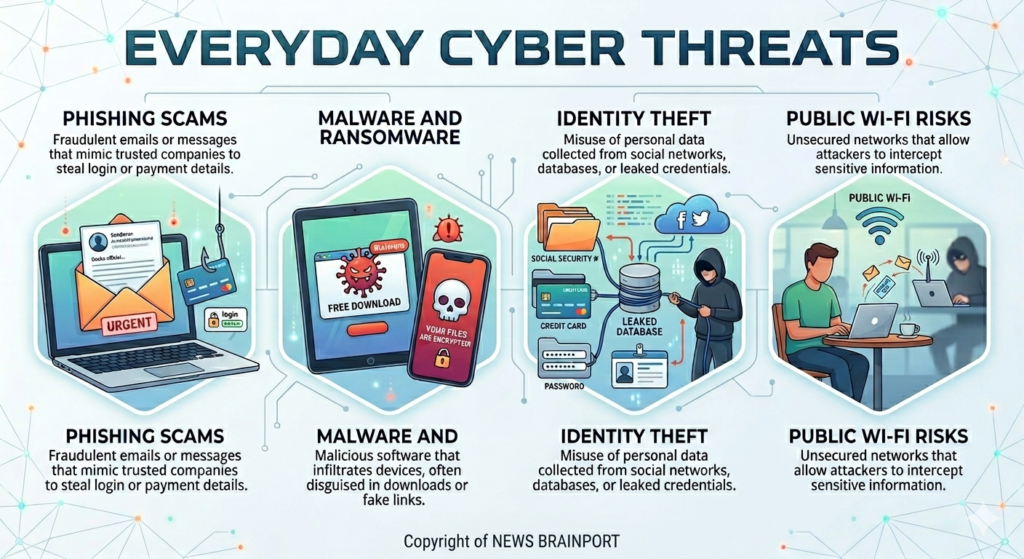
Criminals often exploit simple human errors rather than using complex hacks. Common attacks include phishing scams, which are fraudulent messages designed to steal login or payment details. Malware and ransomware are also common threats. These are malicious programmes that infect devices through downloads or fake links. Identity theft involves the misuse of personal data taken from social networks or leaked credentials. Public Wi-Fi networks also pose a risk, as they allow attackers to intercept sensitive information.
Simple online behaviours can lead to major security breaches. These include using the same password for different platforms or clicking on unknown links. Strong digital habits can drastically reduce these risks. It is important to use strong, unique passwords for every account. A password manager can help store these securely.
Users should enable two-factor authentication whenever it is available. This adds an extra layer of protection during login. It is also vital to stay alert to phishing attempts. Always check sender addresses and avoid sharing sensitive information through email or text.
Update software and devices regularly to fix security flaws. Do not use public Wi-Fi for financial or private transactions. Instead, use a virtual private network (VPN) if necessary. You should also secure personal devices with screen locks and biometric authentication.
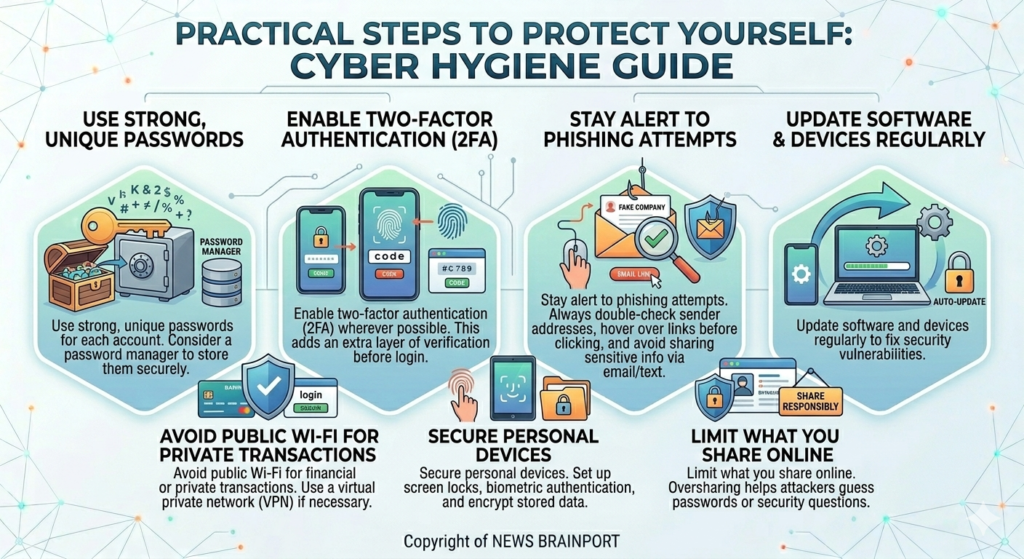
It is wise to limit what is shared online. Oversharing can help attackers guess passwords or security questions. Digital safety is a habit, like locking your doors at night. Educating family members about online safety can improve protection at home. Staying informed and cautious can help prevent financial loss and privacy issues.
NEWS BRAINPORT