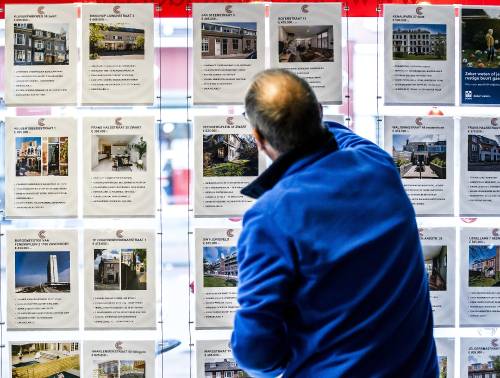
The price growth of existing owner-occupied homes on the tight Dutch housing market will flatten to zero for the rest of this year. Economists from RaboResearch announced this projection today, Wednesday, 10 June 2026. They attribute the stagnation to worsening economic conditions caused by ongoing conflict in the Middle East.
Rising interest rates limit borrowing power
The geopolitical instability has lowered overall economic growth and pushed inflation upward. Carola de Groot, a housing market economist at RaboResearch, explained that these macroeconomic shifts directly impact home buyers.
Higher inflation and rising inflationary risks are driving capital market interest rates upward. These rates directly determine mortgage interest rates, which ultimately reduces the maximum borrowing capacity of households. De Groot noted that while wages will likely rise faster than previously expected, this income boost will not suffice to offset the negative impact of higher mortgage rates, thereby dampening total housing demand.
Market cooling down through 2027
The economists forecast that house prices will grow by 2.8 percent across the entirety of 2026. They project a further deceleration to 2 percent growth in 2027. These figures represent a noticeable cooling of the housing market compared to the rapid price surges observed in recent years.
Severe bottlenecks in construction sector
Furthermore, RaboResearch expects the completion of newly built homes to rise slightly this year before dropping off significantly. Persistent domestic bottlenecks continue to plague the sector, including long project turnaround times, severe electricity grid congestion, and ongoing nitrogen emissions regulations.
The spillover effects of higher mortgage rates driven by the Middle East conflict add further pressure. De Groot also foresees that rising inflation will drive up material and labor costs, making it increasingly difficult for developers to make new housing projects financially viable.
Rental market shifts exacerbate shortages
The housing supply will likely tighten further next year. This shortage is driven by a decline in new construction projects and a slowing wave of landlords selling off former rental properties. However, De Groot concludes that despite the increasing scarcity of available homes, the higher interest rates and persistent economic uncertainty will keep future price growth heavily suppressed.
@ anp | NEWS BRAINPORT