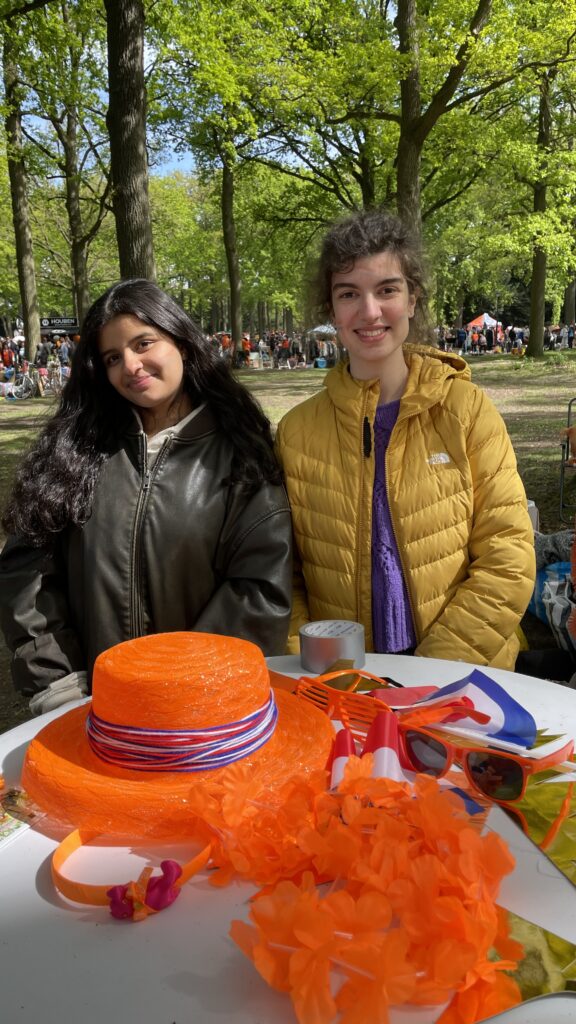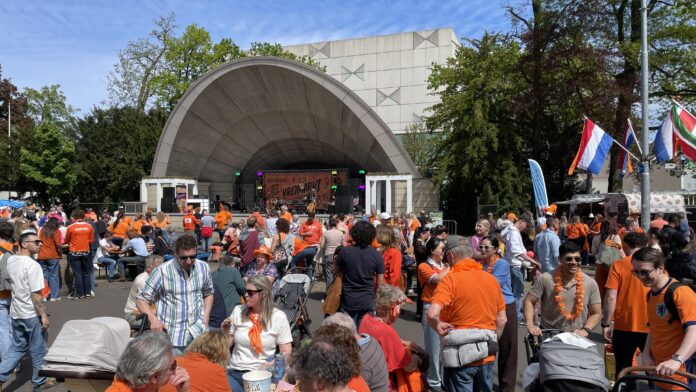
If you are an international resident of the Netherlands, you might at first find the Dutch Koningsdag (King’s Day) strange for celebrating the monarchy in a democratic land. I, for one, had imagined kings and soldiers riding in on horses with awestruck civilians gawking at the royalty. The actual festival is nothing like that. It is a celebration of life, good times, and partying with friends and family.
Eindhoven had several events this past weekend, which you could pick and choose from via the website thisiseindhoven.com. The city was brightly coloured orange, with people carrying the flag of the Netherlands, moving from one event to another. The restaurants, especially the patios (‘terrasjes’), were full of happy faces making merry. There were also several live music events. If all this moving about isn’t for you, you could also follow the tradition of the visit of the King to a couple of places in the Netherlands. This year, it was at Dokkum, in Friesland.
Vrijmarkt on Koningsdag
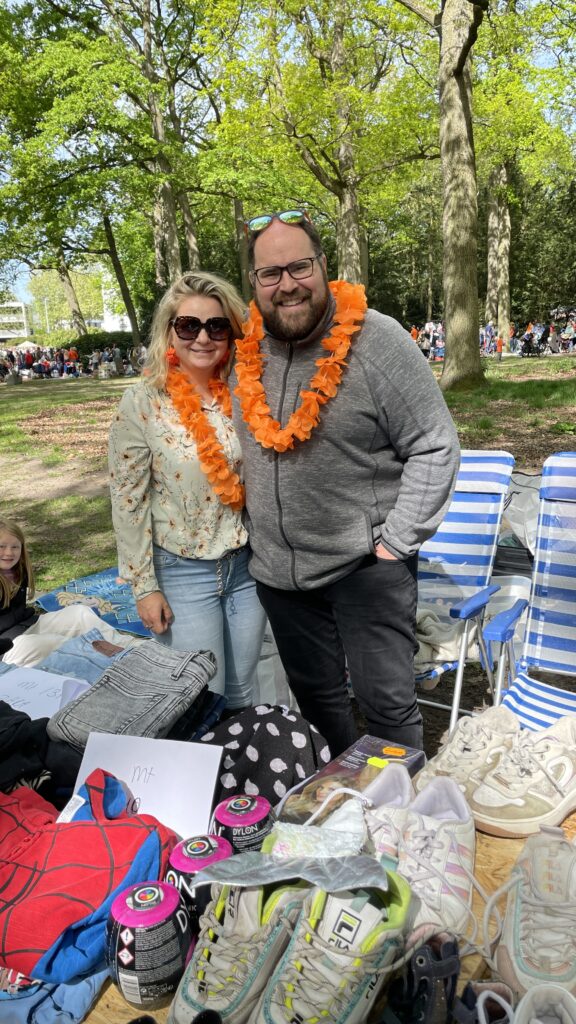
Koningsdag is also a celebration of trade, given the pioneering role the Dutch have played in modern European trade. The Netherlands had the first stock market and some of the oldest companies in the modern financial sense. On Koningsdag, this trade is primarily carried out by families who sell their goods. In Eindhoven, several of the ‘pleins’ and parks had ‘rommelmarkten ’ or second-hand goods markets. The biggest one was in Stadswandelpark. I saw families amble about leisurely, enjoying the good weather, as was the case this year, looking at the innumerable stalls in the ‘vrijmarkt’ or ‘rommelmarkt’. Some even hopped from ‘markt’ to ‘markt’ scouring for deals. As one expat told me, this is indeed what makes the day a pleasure for her. For the families behind the ‘kraam’ or stalls, it is a spring cleaning of sorts, when families let go of old stuff, declutter, and sometimes bring in a few new things as well, because after all, who can resist a good deal?
A traditional celebration with a modern blend
When speaking to one Dutch family that has enjoyed this tradition for years, they mentioned the ritual of eating Tompouce, a Dutch pastry filled with sweet pastry cream and topped with pink or orange icing. Last year, I had the privilege of enjoying this with our Dutch friends, pairing the cake with a warm coffee. They also associated Koningsdag with the ‘Koningsspelen’, which is organised by the schools for children. This day at school begins with a ‘Koningsontbijt’ or a breakfast together, followed by fun and games, with lots of physical activity and sports that give the kids a fun-filled end to the school day and an eagerness to continue the celebration on the Koningsdag itself.
The family added that when they were growing up, it was actually ‘Konninginnedag’. Did you know that Koningsdag was formerly called Koninginnedag until 2013, when Beatrix abdicated in favour of Willem-Alexander? This also led to a change in the event date from April 30th to April 27th.
One of the internationals shared that participating in Koningsdag and its festivities not only gives them a feel for Dutch culture but also enables them to integrate into its spirit. I hope you had a similar experience this year, or that this piece sparks your curiosity to do so next year.