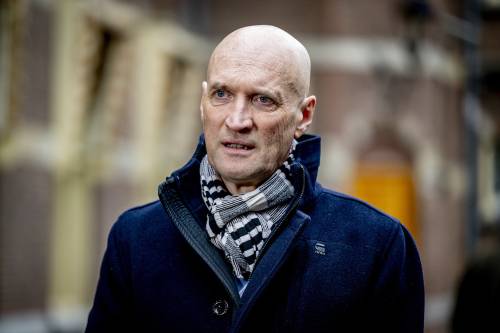
Former health minister Ernst Kuipers, National Climate Platform chair Kees Vendrik, and government special representative for the circular economy Steven van Eijck are calling for new national agreements. These agreements are seen as essential for making healthcare more sustainable. They stress that the government must stay closely involved. Continued financial support, they add, is vital for reducing the sector’s environmental impact.
The current Green Deal Sustainable Healthcare brings together a wide range of green initiatives. It will expire at the end of this year. The previous cabinet intended to leave further progress to the healthcare sector itself. However, the three authors say the greatest results will be achieved only if the government continues to play a central role. “The focus now is on accelerating, scaling up these good practices, and making a much greater impact,” they write.
Environmental footprint
A special World Health Organisation (WHO) committee, of which Kuipers is a member, is also urging stronger action. The committee wants countries to better prepare for the effects of climate change. It also urges them to reduce the environmental footprint of their healthcare systems. According to estimates cited by Kuipers, Vendrik, and Van Eijck, Dutch healthcare is responsible for more than 7 per cent of national greenhouse gas emissions. They say this figure shows how significant the sector’s climate impact has become. The sector also accounts for 13 per cent of raw material consumption and over 4 per cent of waste production.
Their letter argues that using materials and resources more sustainably is essential to reducing the sector’s climate impact. It also states that this shift could create new economic and strategic opportunities. Measures could include constructing energy‑efficient buildings and reducing the use of raw materials. But the trio also believe that the organisation of healthcare itself must change.
They say more prevention and more appropriate care are needed, which in some cases means providing less care. “Not everything is always necessary, not everything is always possible,” they add.
@anp | NEWS BRAINPORT