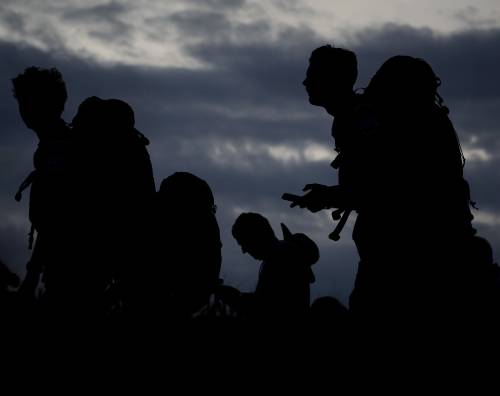
The 108th edition of the Nijmegen Four Days Marches began early on Tuesday morning, with the first participants setting off before dawn. Walkers taking part in the 50-kilometre route started at 4:00 a.m., followed shortly afterwards by those walking 40 and 30 kilometres.
The opening stage, known as Blue Tuesday, takes participants through the Betuwe region, including the town of Elst, where the centre is decorated in blue for the event. On Wednesday, walkers will head towards Wijchen. Thursday’s route passes through Groesbeek, while Friday’s final stage travels via Cuijk before reaching the traditional finish along St. Annastraat in Nijmegen, known during the event as the Via Gladiola.
Of the 47,000 people who registered, 1,239 did not appear at the start. The number of walkers who complete the first day will become clear later on Tuesday. The 40-kilometre route remains the most popular distance, chosen by 38.7 per cent of participants.
The average age of those taking part is 46.8 years, slightly lower than last year’s 47.2 years. However, the average age has generally increased over time. In 2019, it stood at 53 years. This year’s oldest registered participant is 92, while the youngest is 11.
The Red Cross is once again providing first aid during the walking event, supported by hundreds of volunteers. This year marks the 80th anniversary of the organisation’s partnership with the Four Days Marches. Blister treatment is one of the Red Cross’s best-known tasks during the event. Volunteers also help walkers with insect bites, overheating and other minor health issues.
Weather
According to Weeronline, conditions are favourable this year. The forecast includes a mix of sunshine and cloud, with temperatures ranging from 21 to 24 degrees Celsius. Even so, the Red Cross advises participants to prepare properly and wear a cap. “In addition, the motto remains: apply sunscreen, hydrate, and eat enough, but in small portions.”
Organisers do not expect the national water shortage announced last week to affect the event. A spokesperson said that drinking water and energy supplies have priority in water distribution and remain secure.
The dry conditions have, however, affected the temporary pontoon bridge that Defence traditionally installs across the River Meuse near Cuijk for the final day. Surveys showed the bank at Mook could not be reached using the usual setup. To solve the problem, an older end pontoon is being used, allowing the bridge to span the river from bank to bank.
@anp| NEWS BRAINPORT