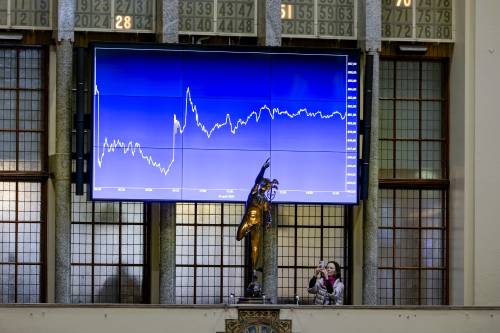
European and Asian stock markets fell sharply on Thursday after Iran attacked major gas installations in Qatar. The strikes pushed oil and gas prices higher and deepened concerns that the conflict involving the United States, Israel and Iran will continue for a long time, adding pressure to global inflation. Analysts noted that Asian economies are particularly vulnerable because they rely heavily on imported oil and LNG from the Middle East.
Winners and Losers
In Europe, the AEX in Amsterdam was 1 percent lower at 990.02 points shortly after the opening, following a 1.3 percent drop the day before. The MidKap also fell 1.3 percent to 971.46 points. Markets in Paris, Frankfurt and London lost up to 1.5 percent. Only two companies in the AEX managed small gains: InPost and JDE Peet’s, both up 0.1 percent. ArcelorMittal was the weakest performer, falling 4.2 percent.
Asian markets also recorded heavy losses. The Nikkei in Tokyo fell 3.5 percent and the Kospi in Seoul dropped 2.8 percent. Markets in Taiwan and Hong Kong lost nearly 2 percent and Shanghai declined by 1.4 percent.
Oil and Gas
The price of Brent, the benchmark for oil from the Middle East and the North Sea, rose by about 6 percent and now stands at more than 114 dollars per barrel. Oil prices have already risen by roughly half since the US and Israel started their war against Iran in late February. The European gas price shot up by 35 percent at the opening of trading.
Tipping point
“This latest escalation feels like a tipping point for the markets. The continuing conflict is no longer about the military might or even the Strait of Hormuz. It is now affecting the heart of the global energy system”, says a stock market expert from financial services provider Saxo. “What is making the markets uneasy is the growing risk of stagflation”.
Interest Rates
Interest rate decisions added to the cautious mood. Investors in Europe are awaiting announcements from the European Central Bank and the Bank of England later in the day. In the United States, the Federal Reserve kept interest rates unchanged on Wednesday.
Fed chair Jerome Powell said he expects only one rate cut this year. However, he warned that inflation is not falling as quickly as hoped. Japan’s central bank also left its key rate unchanged at 0.75 percent but also warned about the impact of rising energy costs on inflation.
@ANP | NEWSBRAINPORT