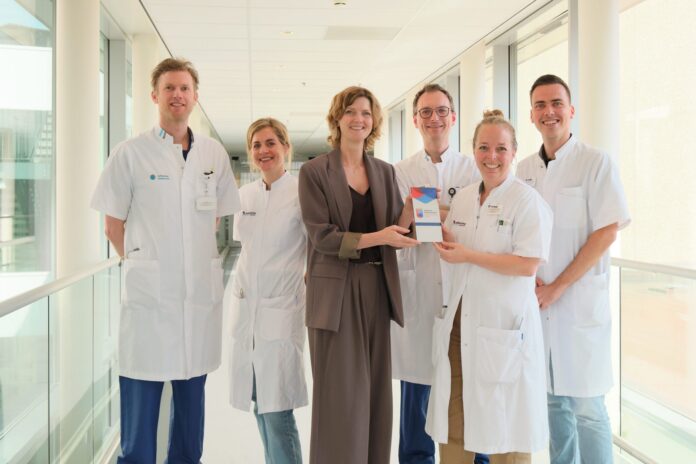
The STZ (Stichting Topklinische Ziekenhuizen– the Foundation for Top Clinical Hospitals) has officially recognised Catharina Hospital in Eindhoven as a top clinical expertise centre for young stroke patients. While people often associate strokes with older age, they also affect younger adults, often bringing life-changing consequences for their careers and families.
Specialised approach
The recognition highlights the hospital’s specialised approach to treating and investigating strokes in younger people. Neurologist Inge van Uden explains that while the stroke itself is the same regardless of age, the underlying causes for younger patients are often different. Older patients typically suffer strokes due to hardened arteries, high blood pressure, or high cholesterol. In younger patients, doctors must look for alternative causes such as genetic predisposition, a tear in a blood vessel wall, a blood-clotting disorder, or a heart defect.
Medical literature generally considers a stroke “young” if the patient is under 50. However, the hospital focuses on the individual rather than a strict age limit. A fit 56-year-old with no risk factors might be treated as a young stroke patient, whereas a 44-year-old with a long history of smoking and high blood pressure might follow a more traditional treatment path.
Identifying the specific cause is essential for effective treatment and preventing future strokes. For example, a patient with a torn blood vessel wall following a cycling accident requires different care than someone with an inflammation or a hole in their heart. Van Uden notes that the impact of a stroke is often greater at a younger age because patients are often managing busy jobs and young families.
Recovery and rehabilitation
Recovery can also be complex. Some patients appear physically well but struggle with overstimulation, memory problems, or difficulties with planning and concentration. To address these issues, the hospital uses a multidisciplinary team. Specialists, including neurologists, cardiologists, radiologists, and rehabilitation doctors, work together to provide comprehensive care.
The hospital also serves as a regional hub, offering support and second opinions to other medical professionals in the area when a cause remains unclear. The goal is to provide certainty for patients during a difficult time and ensure they receive the specific care they need.
NEWS BRAINPORT