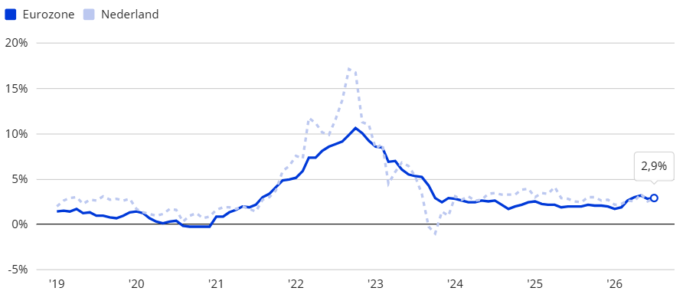
Daily life in the Netherlands became more expensive again in July, according to a preliminary estimate from Statistics Netherlands (CBS). After a brief slowdown in June, inflation picked up, mainly because energy prices rose sharply for the second month in a row.
Eurozone
The pattern is similar across Europe. Eurostat reports that inflation in the eurozone also increased in July, driven by the same spike in oil and gas prices. Eurostat’s figures show that energy became noticeably more expensive across the eurozone in July, while services and everyday goods also rose in price. Core inflation, which excludes energy and food, edged up slightly, indicating that underlying price pressures remain present.
Factors
Since the war in the Middle East began in late February, energy markets have been volatile, and those higher costs continue to ripple through household budgets and business expenses. Food prices stayed flat, but services and industrial goods continued their steady climb. CBS notes that month‑to‑month comparisons can be distorted by seasonal effects, such as summer clothing sales, which temporarily push prices down.
Target
Inflation in the eurozone is still above the European Central Bank’s target of around 2 percent. The ECB kept interest rates unchanged earlier this month to assess how the conflict‑driven energy shock is affecting inflation. Economists say the central bank remains cautious. ING’s Bert Colijn notes that, given the unpredictable situation in the Middle East, another rate increase in September is possible if price pressures persist.
@anp | NEWSBRAINPORT