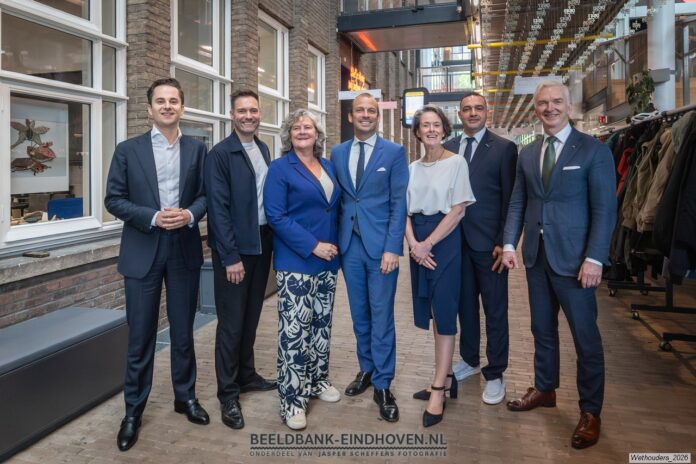
For the 2026 to 2030 administrative term, the Eindhoven City Council has confirmed the appointment of seven full-time alderpersons. Each candidate successfully passed a required integrity check before taking office. The new board is characterized by a mix of continuity and a renewed focus on the practical execution of the city ambitions.
Rik Thijs leads the efforts on the climate and biodiversity crisis. His role has expanded to include work and income, the labor market, and vocational and higher education. He aims to combine his environmental goals with social ones by ensuring that the transition to a greener city also provides employment opportunities. He has set a goal to vergroen at least fifty streets and ten squares during this term.
Mieke Verhees focuses on housing and health. Her portfolio includes an active land policy which gives the city more control over development. She plans to use design to make the city safer and more connected. A major priority for her is the concept of through-flow, which encourages seniors to move into smaller, suitable apartments to free up larger homes for families and starters.
Samir Toub manages poverty and debt along with primary and secondary education. He is also responsible for the humane reception of asylum seekers and refugees. Having started his career in debt services, he brings practical experience to his goal of closing the gap between the rich and the poor. He intends to maintain financial support for vulnerable residents and ensure that children have the support they need for a successful start in life.
Stijn Steenbakkers is responsible for the economy and Brainport. His portfolio also covers the city center and area developments within the ring road. He is focused on the facilities scale-up, which means ensuring that as the city grows, its social and physical infrastructure, such as GP offices and schools, grows at the same pace.
Remco van Doorn serves as the alderperson for finance. In addition to managing the city budget, he oversees neighborhoods, sport, welfare, and heritage. He promotes a strategy of simplifying or removing unnecessary regulations to make the government more accessible. He has committed to achieving at least three concrete results in each of his diverse areas of responsibility.
Robert Strijk handles mobility and organization. His focus is on the masterplan for mobility and making the city more digital and efficient. He stresses the importance of technical realization, moving away from abstract plans and toward actual construction on the streets. This includes managing the complexities of the current net congestion crisis that threatens the city growth.
Mariëlle Giesbertz is the newest member of the board and manages social support, culture, and participation. She believes culture and design should be used as tools to connect people in their neighborhoods. One of her main objectives is to reach the silent middle, referring to the large group of residents who generally do not participate in public debates but whose voices are essential for a balanced democracy. Notably, the Mayor of Veldhoven was present for her swearing-in show of support to his former colleague in the Veldhoven city council.
The council debate regarding these appointments focused on the need for the city to move from policy to practice. While some opposition members worried about splitting the social domain between three aldermen, the coalition argued this would provide more specific focus on critical issues like youth care and poverty. Overall, the board aims to bridge the distance between the government and its citizens through open dialogue and visible results.
NEWS BRAINPORT