The war in the Middle East poses “significant” risks to global economic growth, but it is too early to assess the full impact, the OECD said on Monday.
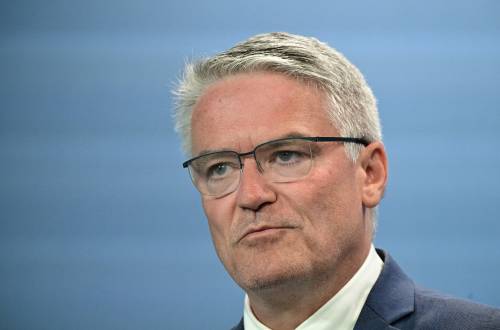
Mathias Cormann, Secretary-General of the Organisation for Economic Co-operation and Development (OECD), said several factors, including the duration and scale of the conflict, would shape the consequences. Speaking at a conference in Bucharest, Romania, he said there are now significant downside risks to the global economy.
One concern is that sharply higher energy prices could reignite inflation, weighing on household purchasing power. Central banks could then respond by raising interest rates, which would push up borrowing costs for both households and companies.
The Paris-based think tank currently expects the global economy to grow by just under 3 per cent in 2026.
Later this week, the European Central Bank (ECB) and the US Federal Reserve are due to announce interest rate decisions. Rates are widely expected to remain unchanged because of the high level of uncertainty. The ECB will also publish new forecasts for economic growth and inflation in the euro area, while the Fed will release updated projections for the United States.
Those forecasts may provide the first indications of the war’s economic impact.
@anp | NEWS BRAINPORT