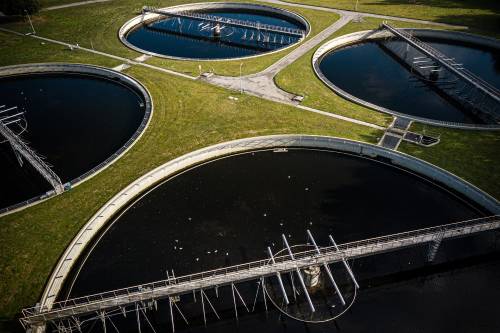
Waterschap Limburg says it has developed a technique that removes more than 80 percent of pharmaceutical residues from wastewater. A standard treatment removes only about 30 percent, so the water board calls the new method “a worldwide first”.
The technique combines an existing purification process that uses sludge granules with powdered activated carbon. Medicinal residues stick to the carbon particles, sink to the bottom, and leave the system together with the sludge. The water board presented this “previously unused” combination on Monday at the treatment plant in Simpelveld in South Limburg.
The Union of Water Authorities confirms that no one has used this approach before. Many water authorities test new purification methods, and they share their findings in working groups. According to the umbrella organisation, Limburg’s results stand out. However, each water authority decides for itself which techniques to adopt.
The purified water flows into the nearby Eyserbeek. As a result, the water board says the quality of the stream has already improved. The Eyserbeek runs through an area where water is used for drinking water production.
Every year, around thirteen tonnes of pharmaceutical residues enter Limburg’s rivers, lakes, and streams. These substances harm aquatic life and affect drinking water quality. Waterschap Limburg says removing all residues is not yet possible and would also be extremely costly. A specialised company incinerates the remaining material, which consists of the loaded carbon and sludge.
Board member Arnold Jansen of Waterschap Limburg says improving water quality requires action from the entire chain, including producers, the healthcare sector, the government, and residents. He urges people to return unused medicines to a pharmacy instead of flushing them down the toilet.
@ANP | News Brainport