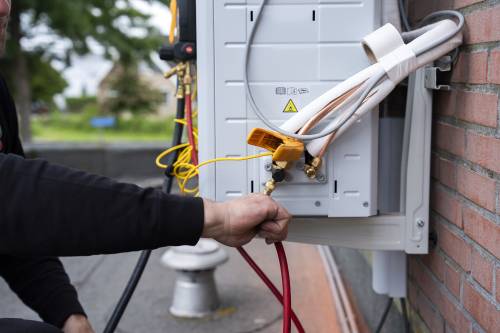
The Dutch government will require homeowners replacing their central heating boilers to switch to at least a hybrid heat pump starting in 2029. Housing Minister Elanor Boekholt-O’Sullivan assured the House of Representatives that the transition must remain financially manageable for homeowners. She emphasized that stricter rules are necessary because households are not phasing out gas boilers quickly enough to meet national climate goals.
Policy returns under D66, VVD, and CDA coalition
The mandate originally surfaced in 2022 under a previous cabinet before being scrapped by the Schoof administration. However, coalition partners D66, VVD, and CDA reinstated the requirement in their early 2026 governing agreement.
According to Minister Boekholt-O’Sullivan, heating homes with smart, hybrid systems reduces gas reliance, lowers energy bills over the long term, and cuts carbon emissions.
Financial support and smart technology ease transition
The ministry is working alongside the installation sector to lower equipment and installation costs. Additionally, homeowners can access existing sustainability subsidies and favorable green loans.
To prevent grid congestion during peak times, the mandate requires installing “smart” hybrid heat pumps. These devices automatically switch back to gas heating when electricity demand surges.
Temporary exemptions protect apartments and historic homes
The cabinet will include detailed implementation plans in its broader climate policy package next spring. However, the minister confirmed temporary exemptions for specific housing types:
- Apartments: Heat pumps often require too much space or generate noise pollution in dense living units.
- Historic monuments: Installing heat pump units on protected buildings requires complex municipal permits.
- Heat network zones: Homes scheduled to join local district heating networks in the near future will not be forced to install heat pumps.
The ministry is currently refining criteria to determine exact exemption categories.
@ anp | NEWS BRAINPORT