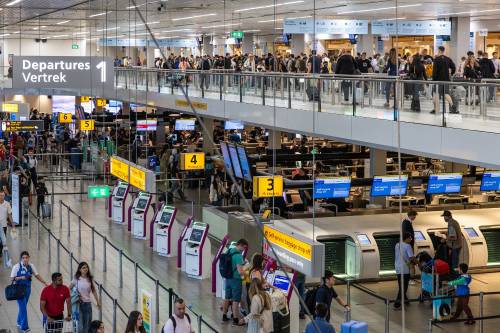
Schiphol Airport considers waiting times for non-EU passengers unacceptable following the launch of a digital border control system. Arriving passengers currently face queues of up to two hours. The aviation organisation Barin reports that the delays have affected thousands of travellers.
Digital border checks
The European Union introduced the Entry/Exit System (EES) in April. The system replaces physical passport stamps for non-EU citizens on short visits. Travellers must register their biometric data upon arrival. Passengers scan their passports, take a facial photograph, and record fingerprints at kiosks.
Schiphol is the only Dutch airport currently using automated eGates for this process. The Royal Netherlands Marechaussee stores the data for three years. Future visits require only a quick verification. However, the initial registration creates significant bottlenecks. A Schiphol spokesperson confirmed that arrival queues have increased noticeably since the rollout. Departing passengers face fewer issues.
Staffing and solutions
Schiphol deploys extra staff every day to guide passengers and answer questions. The airport stresses that the Marechaussee and the Ministry of Defence hold full responsibility for border control.
The Ministry of Justice and Security recently introduced emergency fallback procedures to manage the crowds. Border police can temporarily suspend biometric checks during IT failures or extreme peaks. During these periods, officers solely scan passports to maintain passenger flow. Authorities warn that this temporary flexibility will end in September.
@ anp | NEWSBRAINPORT