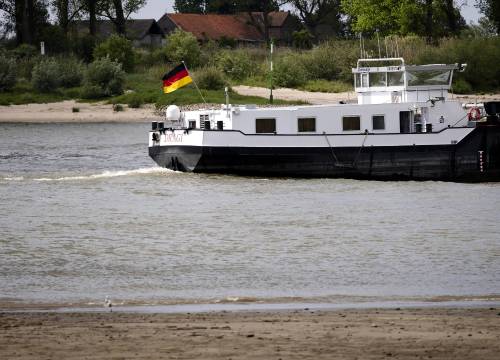
Low water levels hurt the German economy more than the Dutch economy, says ING economist Rico Luman. He explains that the Netherlands can redirect shipping more easily because it has a wider network of waterways, and many routes remain open.
At Lobith, the Rhine reached a new record low on Monday. Some Dutch regions face problems, but Luman says the impact varies. “The Twente region is hit hard due to the closure of the Twente canals. A large section between Rotterdam, Amsterdam, and Antwerp still has no restrictions.”
Germany faces heavier disruption. Ships on the Middle and Upper Rhine can load only about 20 percent of their normal capacity. Much of the German chemical industry sits along the Rhine, which makes alternative transport difficult.
The low water level at Kaub threatens to split the Rhine into two navigable sections. Several German federal states now allow trucks on Sundays to keep supply chains moving. Luman says this helps only slightly. Chemicals, coal, and grain are difficult to move by road, and one inland vessel equals roughly eighty trucks.
Dutch companies also look for alternatives. They deploy more ships and shift cargo to rail and road. A spokesperson for Transport en Logistiek Nederland says shortages of drivers, vehicles, and train capacity make this difficult. “A lot of improvisation is taking place. This leads to delays.”
Luman says companies leave cargo behind when possible. “Some companies cannot wait, and then transport costs much more.”
@ANP | News Brainport