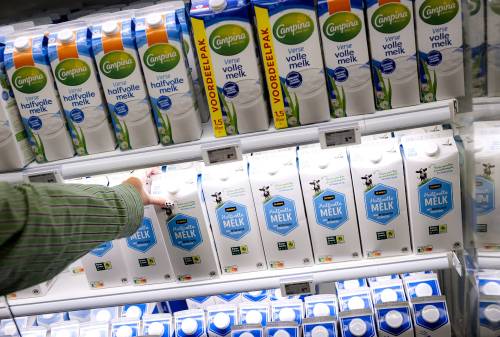
The Central Bureau for Food Trade (CBL) says supermarkets should not collect plastic dairy bottles if the government introduces a deposit system. Last Friday, Minister Stientje van Veldhoven (Climate and Green Growth, D66) announced that she is preparing a proposal to extend deposits to plastic dairy and juice bottles. The supermarket trade association is “very concerned” about how these packages would be collected.
The CBL argues that collecting dairy bottles in supermarkets threatens food safety and public health. In a message to members of the House of Representatives, the organisation referred to research by laboratory chain Eurofins. That study found that open or leaking dairy bottles can cause odour nuisance and attract vermin. The CBL urged politicians to consider these risks carefully.
A CBL spokesperson said Verpact is currently designing a system for collecting deposit‑return dairy bottles. Verpact, the foundation responsible for collecting and reusing deposit packaging for the beverage sector, expects to present an action plan for separate dairy‑bottle collection in September.
A deposit already applies to plastic bottles and cans containing water and soft drinks. Verpact must collect 90 percent of these packages each year, but it has never reached that target. As a result, the Netherlands is expanding the number of collection points. From 2029, European law will also require Verpact to meet the 90 percent target.
@ANP | News Brainport