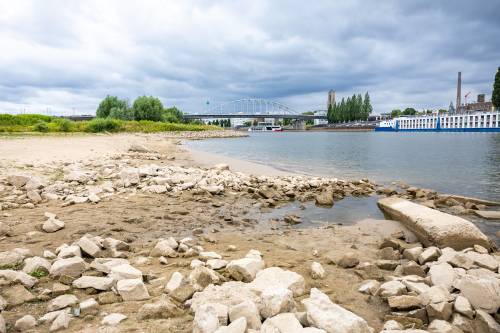
Water boards across the Netherlands are taking more measures to manage the effects of the warm, dry weather.
On Monday, the De Stichtse Rijnlanden Water Board increased the supply of fresh water to western parts of the country from seven to 11 cubic metres per second. The aim is to prevent salinisation in coastal areas.
Delfland has also begun its second annual round of mowing ditches, canals and dikes. According to the water board, this work helps keep water flowing freely and allows inspectors to carry out thorough checks of dikes for possible cracks.
Delfland inspectors examined drought-sensitive dikes several weeks ago. The inspections did not reveal any major cracks or other significant problems.
The ongoing drought has caused water levels in several rivers and canals to fall below normal levels. Water flow in both the Meuse and Rhine rivers is also decreasing.
No impending drinking water shortage
There is currently no threat of a national drinking water shortage, according to the Association of Water Companies in the Netherlands (Vewin).
“We receive calls about that quite often,” a spokesperson said. “But a precipitation deficit is not the same as a drinking water shortage. The drinking water companies do not foresee any acute bottlenecks. Water levels in reservoirs, dunes and lakes are adequate. To reassure people and prevent unnecessary concern, we have published this information on our website.”
The situation remains critical in Northeast Twente, although this has been the case for some time. Last month, drinking water company Vitens informed around 46,000 customers in several municipalities that water pressure could occasionally be lower than usual this summer because drinking water supplies are limited.
“We do not experience such situations elsewhere,” the Vewin spokesperson said.
The Netherlands’ ten drinking water companies are urging people to use water responsibly and reduce consumption during peak periods in the morning and evening.
“Using less water is always better, all year round,” the spokesperson said.
On average, each person in the Netherlands uses 118 litres of water per day. The country’s drinking water companies produce 1.2 billion cubic metres of drinking water each year. Of that total, 60 per cent comes from groundwater, 34 per cent from surface water such as rivers, lakes and canals, and the remainder from bankside groundwater drawn from soil near rivers.
@anp | NEWS BRAINPORT