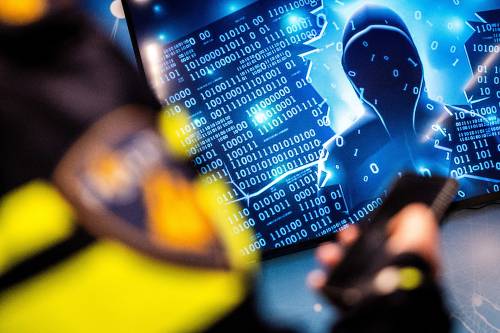
Artificial intelligence is rapidly transforming the cybersecurity landscape, enabling hackers to deploy larger, faster, and far more sophisticated attacks. Netherlands counter-terrorism agency (NCTV) head Marc Kuipers warned that organisations must urgently upgrade their digital defences to keep pace. While cybercriminals previously relied on AI for basic tasks like target selection and phishing emails, the technology is now actively driving the execution of attacks. AI tools can rapidly generate and refine malware, allowing malicious code to adapt, receive live instructions, or rewrite itself mid-attack to evade security measures.
This rapid acceleration in attack capabilities has created a critical gap, with national security at risk due to lagging organisational resilience. The NCTV cautioned that major incidents involving theft, sabotage, or espionage are practically inevitable for the Netherlands. Global incidents—such as the Odido data breach and Russian tampering with military transit cameras—illustrate how both criminal syndicates and hostile nations like Russia, Iran, and North Korea are embedding AI into their cyber weapons.
The threat is particularly acute for small and medium-sized enterprises (SMEs), which lack the government support and resources granted to critical infrastructure operators. Closing this security divide will require state intervention, though defence tools are also evolving. Dutch Justice and Security Minister David van Weel noted that AI can simultaneously be used to discover and patch vulnerabilities, a defensive capability the NCTV views as essential for countering high-speed, automated threats.
@anp | NEWS BRAINPORT