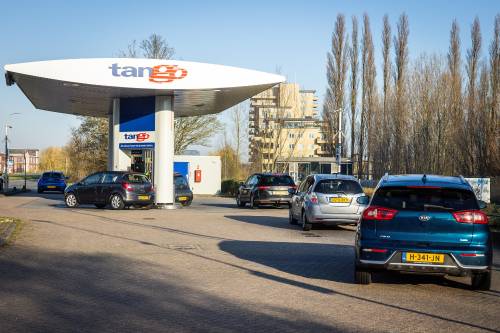
Diesel has become more expensive again, with the recommended retail price rising by nearly four cents. According to consumer platform UnitedConsumers, a liter of diesel now costs €2.815, just shy of the €2.819 record set in early April. The increase continues a steady upward trend seen over recent days. Before the outbreak of the war in the Middle East in late February, diesel prices hovered just above €2 per liter, highlighting how dramatically the market has shifted.
Petrol prices, meanwhile, have edged down slightly. After hitting a new record on Wednesday, the price of a liter of petrol fell by nearly one cent to €2.718. Even with this small decline, both fuels remain close to their highest levels ever recorded.
Market Pressure
Pump prices typically follow oil prices with a delay, and this month’s sharp rise in oil costs is now filtering through to Dutch fuel stations. Tensions between the United States and Iran have intensified, making a safe reopening of the strategically crucial Strait of Hormuz increasingly unlikely. The strait is one of the world’s most important oil transit routes, and any disruption has immediate consequences for global supply.
UnitedConsumers fuel expert Derk Foolen says the near‑record fuel prices are primarily driven by the oil market. According to him, the current situation is “above all a reflection of the oil price”, which has surged in recent weeks.
Pipeline Failure
Oil prices were further pushed upward by the failure of Saudi Arabia’s east‑west pipeline. This line transports crude from the Persian Gulf to the Red Sea. The pipeline allows exporters to bypass the Strait of Hormuz, so any interruption increases pressure on global supply routes.
Bloomberg reports that Saudi Aramco aims to reopen the pipeline within days. As a result, oil prices dipped slightly on Thursday, with Brent crude falling by more than one percent to just over $104 per barrel. Foolen notes that if this downward trend continues, Dutch pump prices could ease somewhat, though the effect is likely to be modest.
German Records
Prices are also surging in Germany. According to motoring association ADAC, diesel has reached €2.453 per liter, while petrol has climbed to €2.314. German Chancellor Friedrich Merz has stated that the government will respond to it. Howver, no concrete measures have yet been announced. Coalition partner SPD has urged swift action.
Earlier this year, Germany implemented a temporary excise duty reduction to ease pressure on motorists. But that measure expired at the end of June. Without it, German drivers are now feeling the full impact of global oil market volatility.
@anp | NEWSBRAINPORT