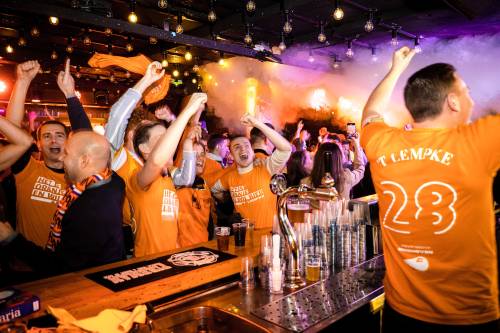
Hospitality entrepreneurs in the Netherlands are seeing hardly any extra revenue during the World Cup, according to trade association KHN. Chairwoman Marijke Vuik says financial benefits depend heavily on how far the Dutch team advances. “If the team progresses, opportunities increase and it often gets busier”.
This year’s World Cup, starting Thursday evening in the United States, Canada, and Mexico, is the largest ever, with 48 participating countries and 104 matches. The presence of teams with large fan bases in the Netherlands, including Curaçao, Cape Verde, Morocco, and Turkey, may also contribute to local interest.
Vuik says many hospitality businesses are organising activities for matches beyond those of the Dutch team, tailored to their regular customers. “In that way, the World Cup can still give the sector a boost”. She also notes that the 2022 World Cup in Qatar took place shortly after the coronavirus crisis, when people were especially eager to go out.
Peaks
Vuik expects strong interest in the first Dutch match on Sunday at 10:00 PM against Japan, particularly among younger fans. The second match, on Saturday 20 June at 7:00 PM against Sweden, is expected to draw a larger crowd due to the favourable timing. The third match, on Friday 26 June at 1:00 AM against Tunisia, will depend largely on the team’s performance up to that point.
History
Rabobank analysed hospitality revenues during the 2021 European Championship and the 2022 World Cup. In 2021, the peaks did not occur during the tournament. This was partly because the Dutch team was eliminated in the round of 16. In 2022, revenue did rise in the week of the quarter‑final loss to Argentina, though the increase compared to a normal week was modest.
These findings align with broader research, the bank confirmed. While cafés that decorate extensively for tournaments often see a noticeable boost, restaurants typically experience fewer visitors during match times, reported ING.
@anp | NEWSBRAINPORT